It is 6:47 on a Tuesday in late May, and the temperature in Portland has dropped to eight degrees Celsius — colder than it should be, even for the city's notorious last frost. Adrian Coate has come home from the office in a coat he had put away for the season.
He is too tired to think about dinner, which is when his kitchen becomes most reliable. The dishes that do not require thought are the dishes that have been cooked many times.
From the cupboard above the stove he takes a can of Bianco DiNapoli whole peeled tomatoes, which he has been buying by the case from the Italian importer on Northwest Thurman since 2019. He takes a can of cannellini beans, the Goya brand, drained and rinsed.
The aromatics are a single small yellow onion, finely diced, and three cloves of garlic, sliced thin. A small handful of sage leaves from the pot on the kitchen windowsill, which has somehow survived four winters.
The pot is the 3-quart enameled cast iron that he bought used at a yard sale in Northeast Portland in 2017 for nine dollars. The enamel is chipped on the inside near the rim. He has not yet had a reason to replace it.
He heats three tablespoons of olive oil over medium and adds the onion with a pinch of salt. Six minutes, until it has turned soft and translucent but not colored. He stirs occasionally.
The garlic and the sage go in next. He tears the sage leaves with his fingers before they hit the pan. Forty-five seconds. The kitchen, by now, smells like an Italian grandmother's kitchen in November.
Half a teaspoon of red pepper flakes, a generous pinch. The pepper flakes are the only assertive note in the dish and he treats them with respect.
He opens the can of tomatoes and pours them into the pot, then takes the wooden spoon and breaks each tomato apart against the side of the pot. He likes the texture of hand-crushed tomatoes more than the texture of a can of pre-crushed.
He fills the empty tomato can a third of the way with cold water, swirls it to catch the last of the juice, and pours that in too. A teaspoon of salt. A grinding of pepper.
The stew comes to a simmer in three minutes. He turns the heat to medium-low and lets it cook, uncovered, for eight minutes. The tomatoes break down further. The kitchen windows fog.
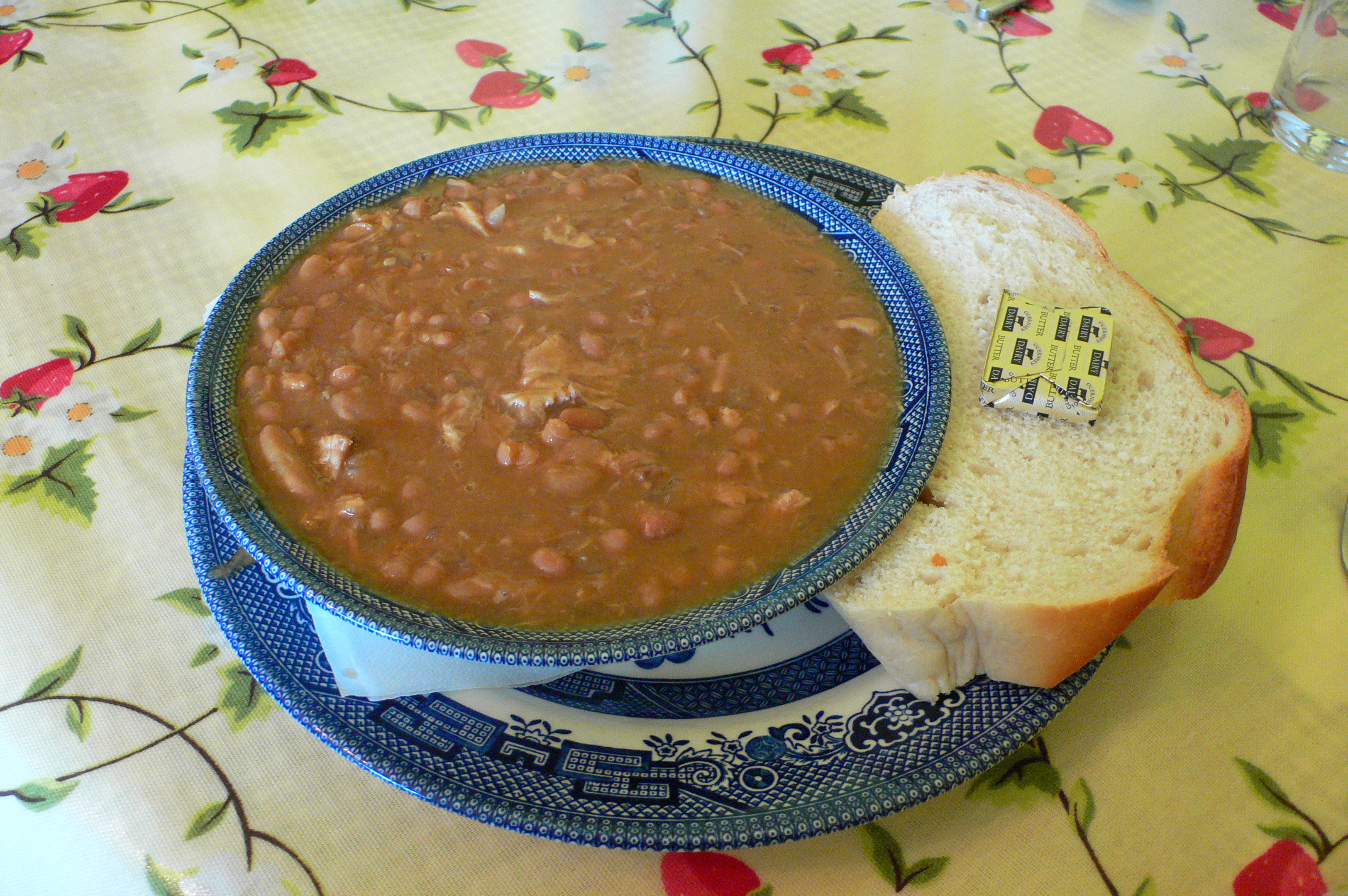
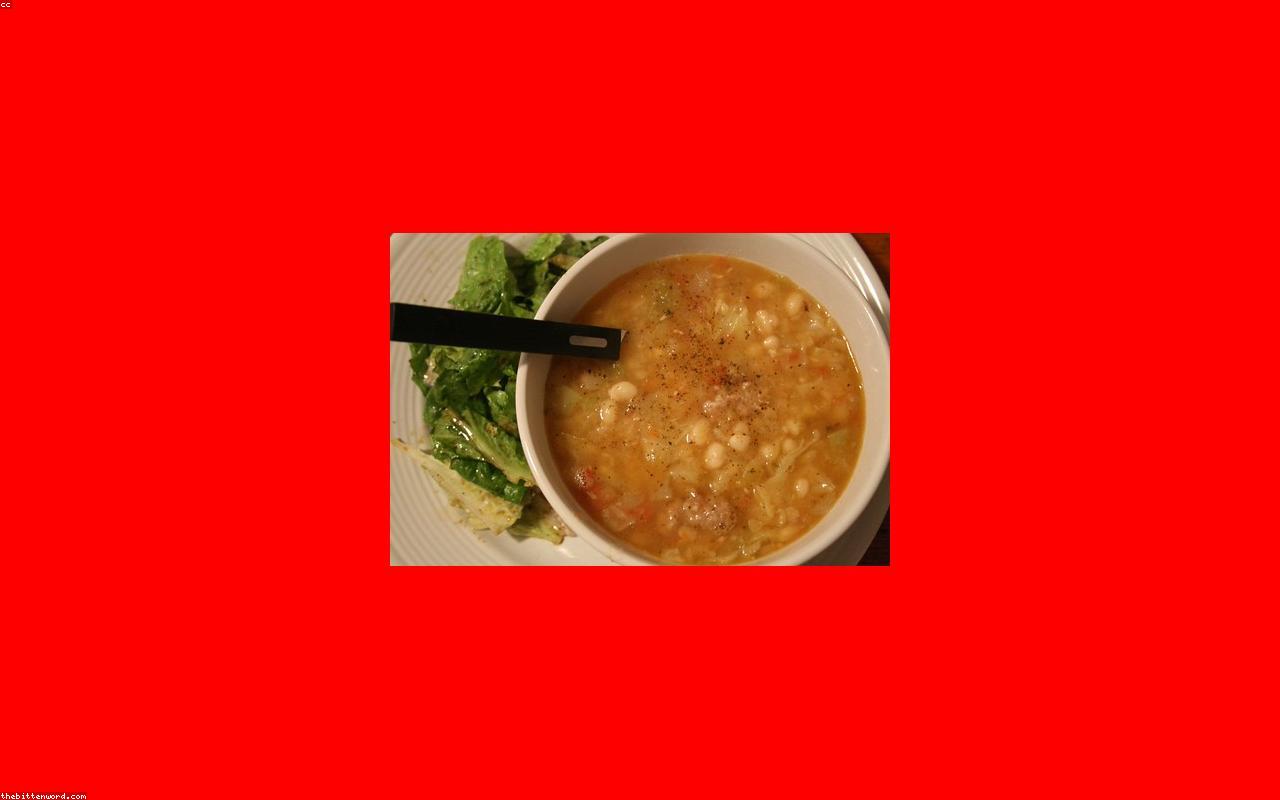
The drained beans go in for the last four minutes, gently, so they keep their shape. He warms them through. He does not boil them. Cannellini beans that have been boiled in tomato sauce become a paste, and the dish wants discrete beans against the sauce.
At the very end he stirs in a tablespoon of good olive oil — better than the cooking oil, this one is a Sicilian estate bottle from De Carlo he keeps for finishing — and a final small grating of lemon zest.
The stew goes into two warm bowls. He toasts two slices of a sourdough boule he bought at Tabor Bread on Saturday, rubs the toast with a halved garlic clove, and lays a slice in the bottom of each bowl.
The total time from cupboard to bowl is sixteen minutes. He has timed it before, in part because he likes to know the answer and in part because he does not trust recipes that promise fifteen-minute dinners.
He eats at the small dining table with his husband. They do not speak for the first few bites, which is the household sign that the dish has worked.
The total cost, by his careful accounting: $1.80 for the tomatoes, $1.20 for the beans, sixty cents for the onion, pennies for the garlic and herbs. Three dollars and change for two generous bowls. The bread was an extra.
Pantry dinners, Adrian believes, are the truest measure of a kitchen. A cook who can make something good from two cans and an onion on a cold Tuesday is a cook who will eat well in any weather.
He saves a small portion of the stew in a glass container for his lunch on Wednesday. It will be better tomorrow than it was tonight, the way bean stews always are.
By 7:35 the pot is in the sink, the kitchen is quiet, and the rain that had been threatening since dusk has finally arrived. He listens to it against the kitchen window and thinks, briefly, about making a second batch.
He decides against it. One pot is enough for a Tuesday. The cupboard, after all, will still be there on Thursday.