It was eighty-six degrees Fahrenheit on the last Saturday in May, and Lou Bertillon was making focaccia in a Brooklyn kitchen that does not have an air conditioner.
She does this once a year. Sometimes twice. The decision is always made the night before, when the heat has built up in the apartment and she knows the kitchen will be a furnace by mid-afternoon. The trick is to start early, when the morning is still bearable, and to commit to the consequences.
The recipe is the one she has used since 2014, written on an index card now soft at the corners, taught to her by a line cook named Renata at a restaurant in Greenpoint that has since closed.
Five cups of bread flour, a tablespoon of fine salt, a teaspoon of instant yeast, two and a quarter cups of warm water, four tablespoons of good olive oil in the dough and a generous further pour for the pan. The salt on top is flaky, the rosemary is from the plant on the fire escape, the heat from the oven is what it is.
She mixes the dough with a wooden spoon in a large ceramic bowl, the one with the chip in the rim. It does not require kneading in the proper sense. Three or four stretches and folds over the first hour, while she drinks a cold coffee and reads the previous day's newspaper.
By nine in the morning the dough has roughly doubled. She pours olive oil into a half-sheet pan, slides the dough in, and lets gravity and her fingertips do the rest.
The second rise happens with the dough already in the pan. An hour, maybe ninety minutes, depending on how hot the kitchen has become. By eleven, the dough is puffy and full of small bubbles just under the surface. The hot weather, the thing she is fighting in every other respect, is doing her the favour of cutting the proof time nearly in half.
She dimples the dough with her fingers, pressing all the way to the bottom of the pan in a regular grid. The wells fill with the olive oil that has pooled around the edges. She sprinkles flaky salt over the top, then a generous rain of rosemary needles pulled from the plant on the fire escape that morning.
The oven goes on at 450 degrees Fahrenheit. The thermometer on the kitchen wall rises with it. The bread bakes for twenty-two to twenty-five minutes.
The point of focaccia in summer, Lou would say if pressed, is that it is not really bread. It is a vehicle for olive oil and salt and one excellent herb. The dough is just there to hold them.
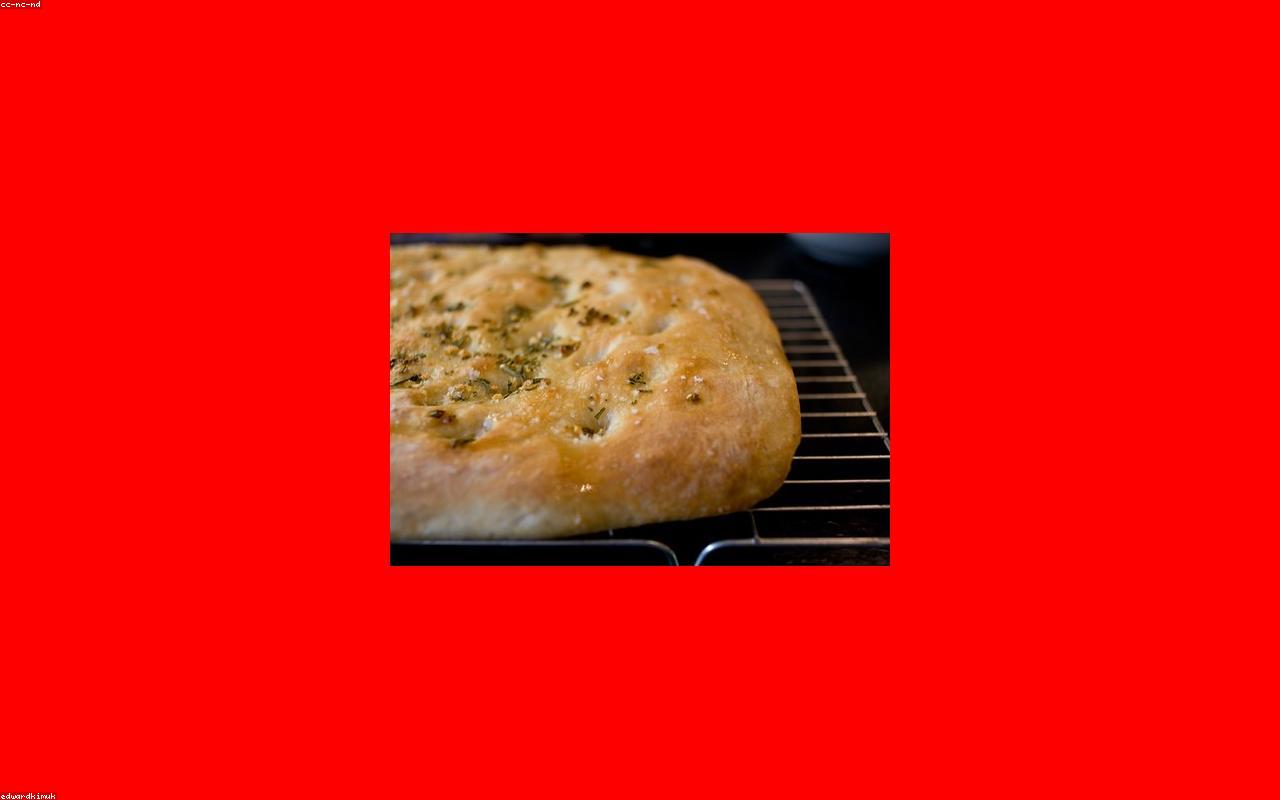
When it comes out of the oven the focaccia is golden, blistered at the corners, the rosemary turned a darker green and pleasantly resinous. The kitchen smells like Liguria, or like Lou's idea of Liguria, since she has never been.
She sets it on a wire rack on top of the stove and opens both windows wider. The radio is playing something with horns in it. Her partner, who works from home, drifts in from the back room with the look of a person whose concentration has been broken by a smell.
They eat the first square at noon, standing at the counter, with a glass of cold rosé from the bottle in the fridge that they opened on Thursday. They eat a second square at one, with thinly sliced tomato and a piece of buffalo mozzarella that has come from the small Italian place on Court Street.
By three in the afternoon the focaccia is half gone. By five it is two-thirds gone. Lou's friend Margie, who lives upstairs and has been promised a piece, comes down at six. She is given the corner piece, which is everyone's favourite, because she has known Lou for fourteen years and the corner is what she earns.
What is left, by Sunday morning, is enough for a breakfast sandwich. Lou splits a square horizontally, runs it briefly under the broiler, lays in two fried eggs and a thin slice of provolone, and eats it standing at the counter, the way she eats most things.
She washes the half-sheet pan with hot water and a little soap. The pan is the same one she has used for this bread since 2017. It has darkened over the years. She does not dry it. She lets it air-dry on the rack, the way her mother used to.
The rosemary plant on the fire escape, she notes, has held up surprisingly well to the heat. She waters it before bed. She makes a note to buy a second plant, in case this one finally gives up in August.
She does not bake focaccia again until July, when it gets hot enough that the air feels like a presence in the apartment, and the only sensible response is to make the kitchen even hotter, on purpose, for an hour, in service of bread.
The recipe, if pressed, she will write out for you. But she would rather you came over for a square.