Sam Park's apartment in Seoul is forty-one square metres and the kitchen, generously measured, is six. It does not contain an oven.
This is not unusual in Korean apartments of a certain age. Ovens are not standard equipment in the way they are in American kitchens. Most Korean home cooks who want to bake use a small countertop convection oven, the kind that fits a single sheet pan and lives on a corner of the counter when not in use.
Sam does not own one. He has thought about it. He keeps deciding against it.
Instead, when he wants bread, which is two or three times a month, he bakes a small enriched loaf in a heavy enamelled cast iron pot on the stove.
The method is borrowed in part from an Italian friend in Milan who taught him a stovetop focaccia trick in 2019, and in part from a Korean baker named Yuna who runs a tiny bakery in Mangwon-dong and who, when Sam asked her about stovetop baking, drew him a diagram on a paper napkin and told him to go home and try it.
He has been refining it for about three years.
The dough is a small batch — about 300 grams of bread flour, 180 grams of warm milk, 30 grams of softened butter, 25 grams of sugar, a teaspoon and a half of instant yeast, a teaspoon of fine salt, and a single egg yolk.
He mixes it in a small ceramic bowl with a wooden spoon, then kneads it for about six minutes on the counter. The dough is soft and slightly tacky and behaves itself.
He puts the dough in an oiled bowl, covers it with a small plate, and places the bowl on top of the rice cooker, which has been on its keep-warm setting for the last few hours. The lid of the rice cooker is just warm enough to give the dough a gentle assist on cool spring mornings.
The first rise takes about an hour. He shapes the dough into a small round, places it on a square of parchment, and lets it rise a second time, again on top of the rice cooker, for about thirty-five minutes.
While it rises he puts a heavy 22-centimetre Le Creuset pot, the one his sister sent him from Paris in 2021, on the smallest gas burner on his stove, on a heat diffuser, on its lowest setting. The pot is empty. The lid is on.
The pot warms slowly. By the time the dough is ready, the pot is hot but not blazing. He lifts the dough by its parchment, lowers it gently into the pot, scores it with a small paring knife, replaces the lid, and turns the heat to medium-low.
The loaf bakes, more or less, by conduction and convection. It takes about thirty-five minutes. He turns the loaf at the halfway mark, lifting it by its parchment and rotating it 180 degrees so that the side nearest the gas flame does not over-brown.
After about thirty minutes he removes the lid. The top of the loaf is pale, in the way that stovetop bread is always pale, but the rest of the loaf is fully baked. He gives it another five to eight minutes uncovered, watching closely, until the top has taken on a little colour.
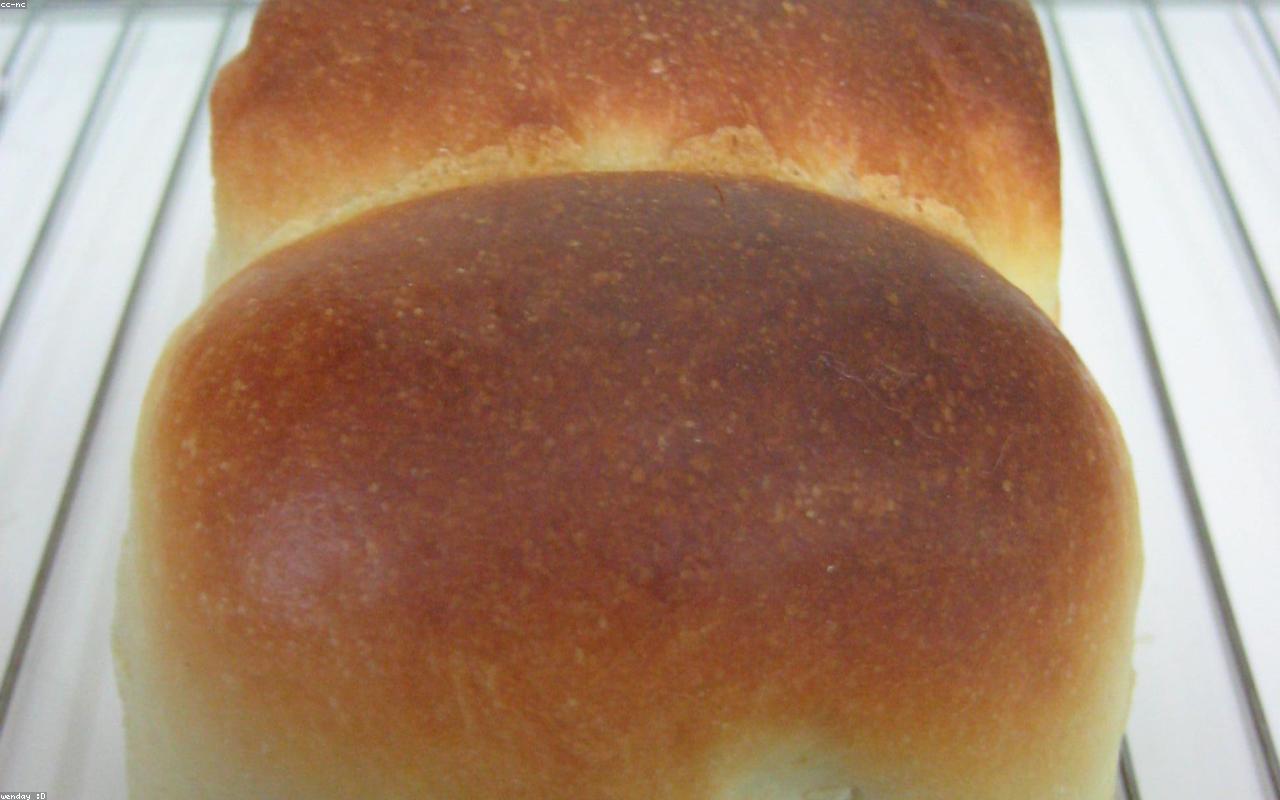
The finished loaf is about the size of a softball. The crust is thin and tender. The crumb is soft and slightly enriched, somewhere between a milk bread and a brioche. It is not, by any measure, a great bread. It is a perfectly good small loaf made by a man without an oven, in a small apartment, on a Tuesday evening.
Sam eats two slices with butter and a small dish of plum jam he bought at a market in Tongin-dong last autumn. He drinks a cup of barley tea with it. The radio is playing the news. The lights in the building across the alley have come on.
The loaf is gone by Thursday. He eats it as toast for breakfast, with butter and salt; he tears chunks of it into the cabbage soup he makes on Wednesday nights; he gives a quarter of it to the older woman across the hall, who has lived in the building since 1991 and who pretends, every time, that she does not want it.
The pot goes into the sink and gets washed in hot water. The rice cooker resumes its actual job. The kitchen, six square metres of it, smells faintly of bread for the rest of the evening.
Sam will probably still buy a small countertop oven eventually. He has had the same conversation with himself for three years. For now, the pot and the rice cooker and the small ceremony of the stovetop loaf are enough, and there is something he likes about the limitation of it, about the loaf that comes from the kitchen as it is rather than from the kitchen he might have.