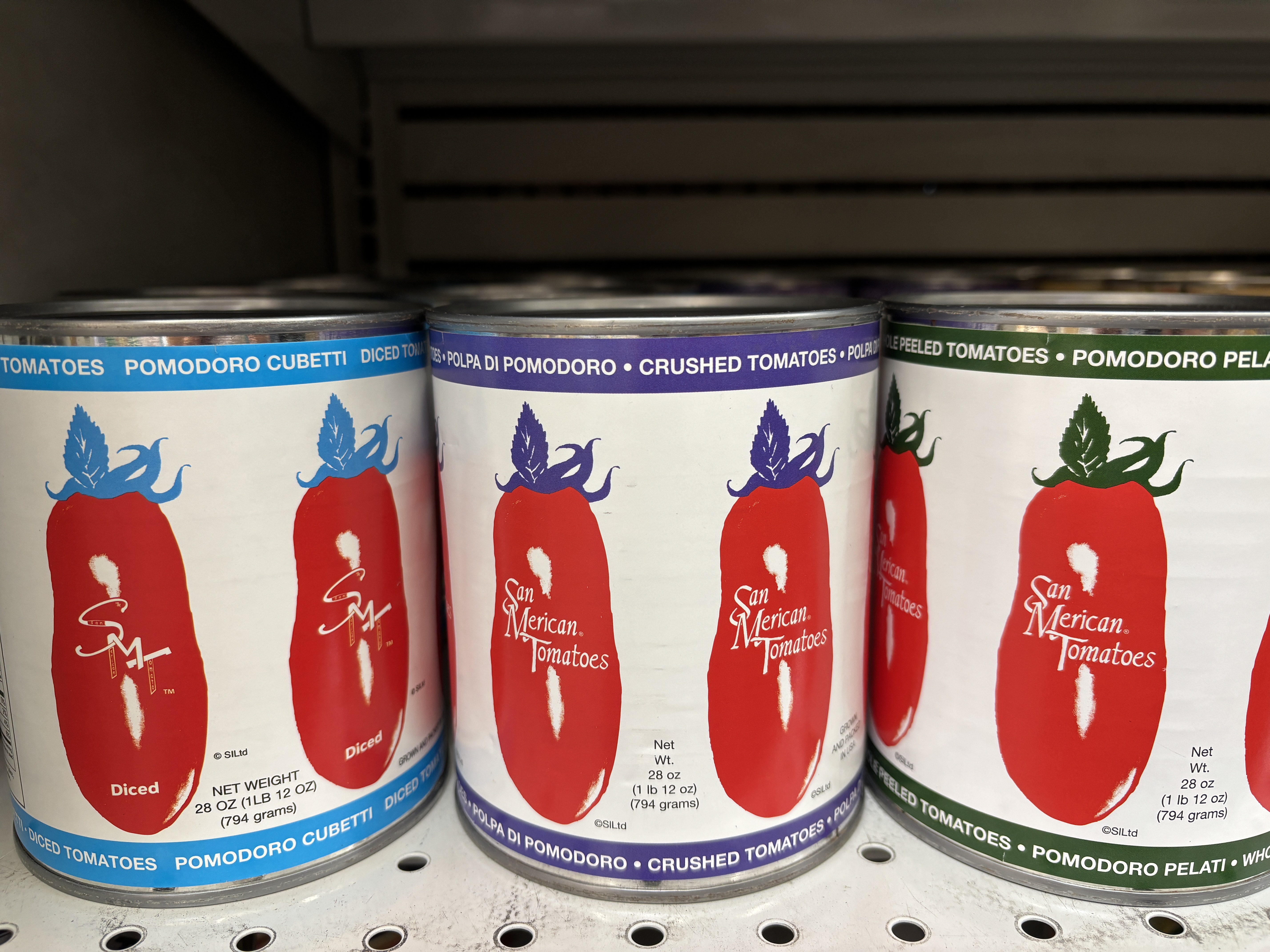
Adrian Coate spent two weeks in March 2026 buying tinned tomatoes from every store within a mile of his apartment in Portland's Buckman neighborhood. He came home with eleven tins from eight producers. They sat in a row on his kitchen counter for a day before he started cooking.
The plan was simple. Cook the same sauce from each tin. Note the differences. Decide which tin he would buy in the future and which he would not bother with again.
The sauce was the one his grandmother Concetta used to make when he was small. Three tablespoons of olive oil. Two cloves of garlic, smashed. The tin of tomatoes. A pinch of salt. Twenty minutes on a low simmer. A few leaves of basil if there were any, which in March there were not. Tasted from a wooden spoon, eaten on a piece of bread without pasta to interfere.
The eleven tins, in the order he tried them, were as follows. Two San Marzano DOP from different Italian producers. One San Marzano DOP from a third producer, with the DOP seal but no basil leaf inside. A tin of Bianco DiNapoli California-grown whole peeled. Two tins of Cento, one labeled San Marzano and one labeled Italian-style whole peeled. A tin of Trader Joe's organic whole peeled. A tin of Hunt's whole peeled. A tin of Muir Glen fire-roasted. And a tin of Mutti polpa, which is not whole peeled but a chopped pulp.
The first finding, which is not surprising but bears repeating, is that the tin matters less than the cook will tell you. Most of the eleven tins produced a perfectly good sauce. The differences were real but not dramatic, and a dinner guest would have to be paying close attention to rank them in a blind tasting.
The second finding, which is more interesting, is that the differences within categories were larger than the differences between categories. Two San Marzano DOP tins from different producers tasted noticeably different. One was sweet and bright with a thin skin and almost no seed. The other was acidic, with thicker skins and more pulp, and required a longer simmer.
The third finding is that California-grown tomatoes have closed the gap with Italian imports to a degree that surprised Adrian. The Bianco DiNapoli tin produced a sauce as good as the best of the Italian San Marzano DOP tins, and at a slightly lower price. He has been buying Bianco DiNapoli for two years on the recommendation of a friend who is a sommelier in Berkeley, and the test confirmed what he had been doing.
The Cento San Marzano was the bigger surprise. Despite the label, the tin did not carry the DOP seal of the Italian protected designation, and the tomatoes themselves were a different variety grown in the United States. The sauce was perfectly fine but unremarkable, and the price was about double what it should have been for what was in the tin. Adrian decided he would not buy Cento again.
The Cento Italian-style whole peeled, which costs less and makes no claim to being San Marzano, was actually a better tin for the money. The sauce was a touch less elegant than the genuine DOP tins, but it was good, and the price was reasonable.
The Trader Joe's organic was a workhorse. Not the best in the lineup but not far off the middle. At about two dollars a tin it is hard to beat. Adrian found himself reaching for it for everyday weeknight pasta and saving the more expensive tins for Sunday cooking.
Hunt's was a disappointment. The sauce had a faint metallic note that did not cook out. Adrian suspects the lining of the can or the variety of tomato, but he could not be sure. He cooked the second half of the tin into a chili the next night and the metallic note was less present, masked by the other ingredients, but still there.
Muir Glen fire-roasted is not really comparable to the others, because the tomatoes are roasted before canning and the flavor is different. It made a sauce that was smoky and assertive, good for a quick puttanesca or for stirring into beans, but not what you want for a plain pasta with garlic and oil.
Mutti polpa, the chopped pulp in the white-and-red tin, is a different category entirely. It is not whole peeled tomatoes. It is a smooth chopped product that cooks down faster and works better for pizza sauce and for any application where you want a thicker, less rustic consistency. Adrian keeps a tin or two of Mutti polpa on the shelf for exactly those uses, separate from his whole peeled stash.
The first San Marzano DOP tin, from a producer called La Valle, was the winner of the eleven. The tomatoes were sweet, the skin was thin, the pulp was abundant, and the cooked sauce had a balance that none of the others quite matched. Adrian paid six dollars and forty-nine cents for the 28-ounce tin at a small Italian grocery on Hawthorne. It is not an everyday tin. It is a Sunday tin.
The Bianco DiNapoli was the everyday tin. Five dollars and ninety-nine cents at the same grocery, slightly less at the larger market on Belmont. He buys six tins at a time.
The Trader Joe's organic is the backup. Two dollars and nineteen cents, kept on hand for nights when he runs out of the better stuff.
The Mutti polpa is the specialty. Three dollars and forty-nine cents, used for pizza and for any sauce that needs to be smooth.
Everything else is gone from the pantry. The Cento, the Hunt's, the second San Marzano DOP that was unremarkable, the Muir Glen fire-roasted. The shelf is smaller and the cooking has not suffered.
There are a few notes on technique. The tomatoes from a whole-peeled tin should be crushed by hand, not blended, for almost all uses. Adrian crushes them in a bowl with his fingers before they go into the pan. Blended tomatoes are too smooth and the texture of the finished sauce is wrong.
Salt should go in early. The tomatoes need time to absorb it.
If the sauce is too acidic, a quarter teaspoon of sugar will help. So will a small carrot, peeled and dropped in whole, then fished out at the end. Adrian prefers the carrot.
The tin matters less than what you do with it. But the tin does matter, and the difference between the best tin and the worst is real enough to justify paying attention. The exercise of cooking through eleven of them in two weeks left Adrian with a smaller shelf, a clearer preference, and the unsentimental knowledge that the cheapest tin will, on a Tuesday in February, feed a household perfectly well.