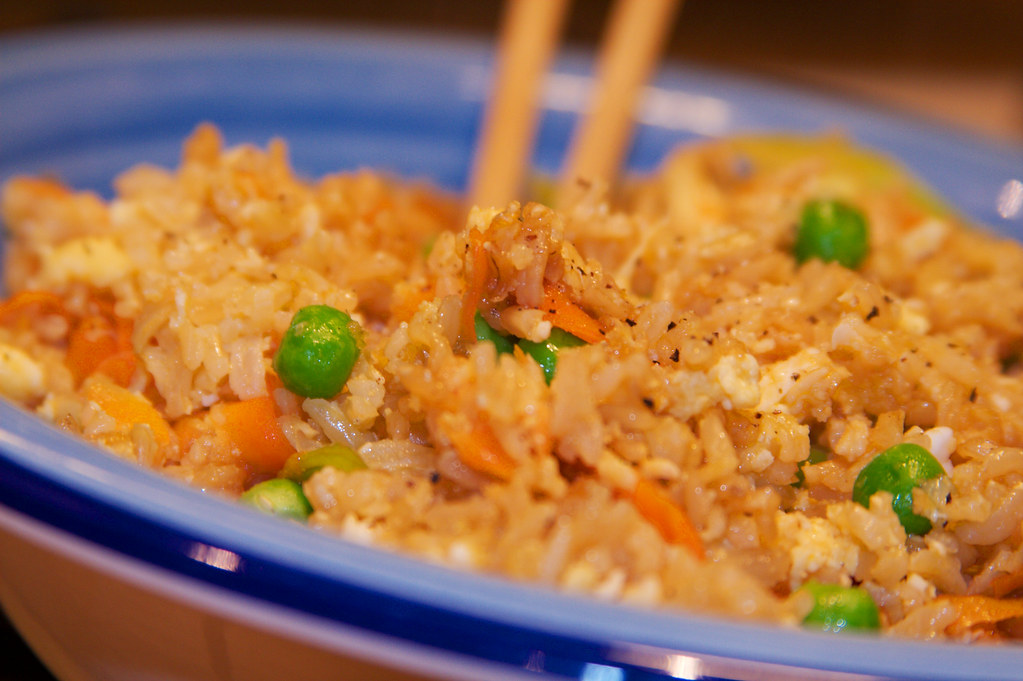
Sam Park keeps a small carbon steel wok on the front-left burner of his kitchen in central Seoul. It is twelve inches across, the handle wrapped in faded green twine, and it has lived on that burner since he moved into the apartment in October 2022.
On a Tuesday evening in mid-May, the wok is, as usual, the first thing he reaches for. The reason is the small Lock&Lock container of cold jasmine rice in the back of his fridge, three days old, the rice gone slightly stiff in the way that is essential to fried rice.
Hot, freshly cooked rice cannot be fried. It clumps. It steams. The starches have not had time to retrograde and relax their grip on each other. This is a kitchen fact, not a preference.
He puts the wok over medium-high and lets it heat for two full minutes — dry — until a drop of water flicked from his fingers dances and disappears. This is the Mandarin wok hei test, and it is the only test he uses.
The inventory tonight is modest. One and a half cups of cold rice. Two eggs from a six-pack he bought at the GS25 downstairs on Sunday. A half bunch of spring onion, the white parts still firm. A small piece of leftover roast pork from Saturday, maybe three ounces.
He chops the spring onion into half-inch lengths, separating the whites from the greens. The pork goes into small dice. The eggs get cracked into a small bowl and beaten with chopsticks, lightly, just enough to break the yolks.
Two tablespoons of neutral oil — he uses sunflower, which is the household oil in Korean kitchens of his generation — go into the wok and shimmer immediately. He swirls the pan once.
The pork goes in first and gets ten seconds of contact with the hot steel, just to wake it up. He pushes it to the side of the wok with a wooden spatula. The whites of the spring onion follow, then a half clove of garlic, smashed.
When the garlic is fragrant — three seconds, four — he tips in the beaten eggs and lets them sit for one second before scrambling them in fast, broken curds. The eggs should be just set but still glossy when the rice comes in.
The cold rice goes in all at once. He breaks up the clumps with the side of the spatula, not the flat, working from the edges of the wok toward the center. This takes about forty-five seconds.
Now the seasoning. One scant tablespoon of light soy. A half teaspoon of toasted sesame oil. A pinch of white pepper. He tosses the rice up the side of the wok in a folding motion, three or four times, to coat every grain.
The greens of the spring onion go in at the very end, off the heat. They will wilt in the residual heat of the pan without losing their color.
From the moment the oil hit the wok to the moment the dish was in a bowl, the cook time was four minutes and ten seconds. Sam timed it once, on a Sunday afternoon when he was bored.
He eats standing up at the kitchen counter, looking out the window at the apartment building across the alley. The bowl is a small celadon piece his mother gave him in 2019. The chopsticks are stainless steel, Korean-flat, indestructible.
Fried rice, Sam thinks, is not a recipe. It is a rule. The rule is: cold rice, hot wok, one protein, one aromatic, one green, two seasonings, four minutes.
Everything else is decoration. Some weeks the protein is leftover chicken. Some weeks it is a single Spam slice, cubed, which he does not apologize for. Some weeks the green is a handful of frozen peas, defrosted under hot tap water.
What he does not do: he does not add frozen mixed vegetables from a bag. He does not add ketchup. He does not put the dish in a non-stick skillet at low heat and call it fried rice. These are not snobberies. They are different dishes.
The wok has paid for itself many times over. He paid eighty-three thousand won for it in 2022, which was around sixty US dollars. He has cooked, by his rough count, two hundred and forty fried rices in it since.
He wipes the wok with a paper towel while it is still warm, runs it under hot water for ten seconds, dries it with a clean cloth, and puts it back on the burner. He oils it lightly. The whole post-cook ritual takes a minute.
By 7:38 the kitchen is clean and Sam is sitting on the small couch in the front room with a glass of cold barley tea, the apartment quiet, the wok back where it belongs.
The fried-rice rule is not the answer to every Tuesday. But it is the answer to most of them, and that, for a single person cooking alone at the end of a long workday, is what a default dish is supposed to be.
Filed under