The kitchen at 422 Sterling Place measures four feet wide and nine feet long. Anna Petrosyan has cooked in it for eleven years, which is longer than she lived in the apartment in Yerevan where she learned to cook in the first place.
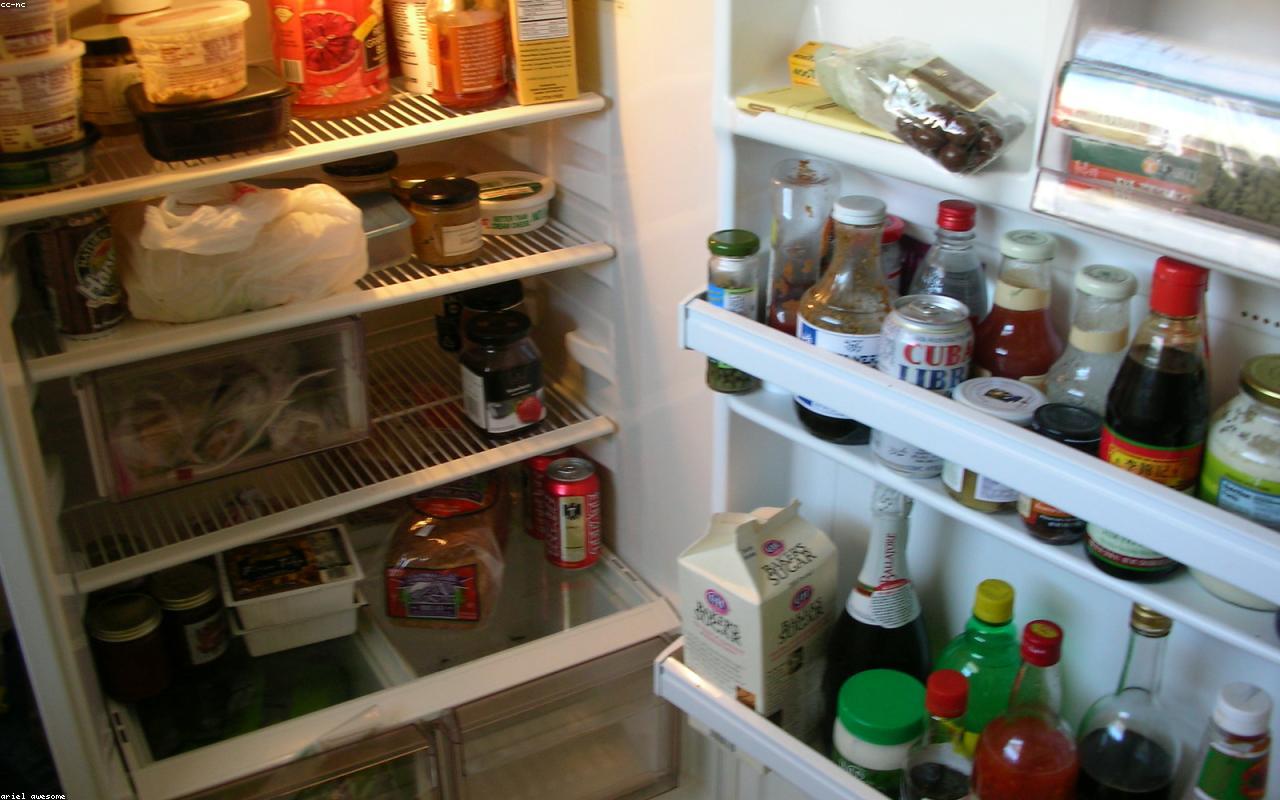
The stove is a four-burner Magic Chef from 1998, off-white, with a pilot light that has only failed twice. The refrigerator is a half-height under-counter unit that hums in B-flat. There is no dishwasher and there has never been one.
Anna cooks dinner for two people six nights a week. On Mondays they eat leftover rice and lentils. On Sundays they eat out, usually at a Bangladeshi place on Franklin Avenue called Korai Kitchen, where the owner remembers their order.
The cutting board lives on the stove when the stove is off. When she wants to cook, she lifts the board and props it against the wall behind the sink. The board itself is end-grain maple, four inches thick, bought used at a kitchen-supply liquidation in Long Island City in 2017 for forty dollars.
There is one pan in active rotation, a 10-inch Lodge cast iron she has owned since 2014. There is a 4-quart enameled Dutch oven for stews and beans. There is a small saucepan for sauces and one for boiling water. That is the whole batterie.
Anna stopped buying kitchen things in 2019. She had begun to notice that every new tool meant something else had to leave the apartment, and the math stopped being worth it. The garlic press her aunt sent for Christmas that year went to a younger neighbor across the hall.
The colander hangs from a nail driven into the doorframe between the kitchen and the hallway. It rotates slowly when the radiator clanks. This used to bother her and now it does not.
Most weeknight dinners are built on what she calls the three-ingredient floor. One starch, one allium, one green thing. Sometimes a tin of fish. Sometimes an egg. The pantry is two narrow cabinets above the stove, and she has organized it so that she can reach everything from one spot.
On a Tuesday in February she cooks pasta with garlic, anchovies, and the wilted outer leaves of a head of escarole. The pasta water boils on one burner while the anchovies dissolve into olive oil on another. The escarole goes in last, just to soften. The whole dish takes the time it takes for the pasta to cook.
Anna has thought a lot about why she does not want a bigger kitchen. She makes good money as a paralegal at a firm in Midtown. She could move. She has done the apartment listings, more than once, on the F train coming home.
Part of it is that the small kitchen has forced her to be honest about how she actually wants to eat. She does not want to cook for nine. She does not want a stand mixer. She has owned three of them in her life and they were always given away.
Part of it is also that the kitchen makes her efficient in a way that pleases her. There is no walking back and forth. The salt is six inches from the stove. The towels are two feet behind her. Every motion is short.
Her partner Jorge does the dishes. He stands at the sink and she sits on the threshold of the kitchen on a small wooden stool and they talk about the day. The stool was made by his grandfather in Mayagüez in the 1970s, and it has survived four apartments.
Friends sometimes come over for dinner and ask, kindly, how she manages. Anna has a stock answer now. She tells them she only cooks one thing at a time. The Bolognese on Sunday is a single act for three hours. The Tuesday pasta is a single act for fifteen minutes. There is no parallel processing.
She admits she would not want to host a holiday meal in this kitchen, and she does not try. Thanksgiving is at Jorge's sister's house in Queens. Easter is at her aunt's in Bay Ridge. Birthdays are restaurants.
The freezer holds three things: a half-bag of frozen peas, a sealed pint of chicken stock from a batch she made in October, and a brick of Trader Joe's puff pastry, in case.
She keeps a list on the inside of one cabinet door, written in pencil on a piece of an envelope, of dishes she wants to learn. The list is six items long and has been six items long for two years. She crosses one off occasionally and adds another. She is in no hurry.
Last month she made khash for the first time in the apartment, the slow-cooked tripe and feet soup her grandmother served on January mornings in Gyumri. It took thirteen hours in the Dutch oven. The apartment smelled for two days. She thought it was worth it. Jorge politely disagreed.
The kitchen is too small to be a hobby. That, Anna says, is the gift of it. She cannot perform cooking. She cannot photograph it well, which she does not want to do anyway. She can only feed two people, on a Tuesday, with what she has.
On the morning this piece was reported, she made coffee in a stovetop Moka and toast in the cast iron pan and ate standing at the counter. The whole act took eleven minutes. She did the dishes before she left for work.